 Lincoln Egress Windows
 Basement Window Replacement in Lincoln
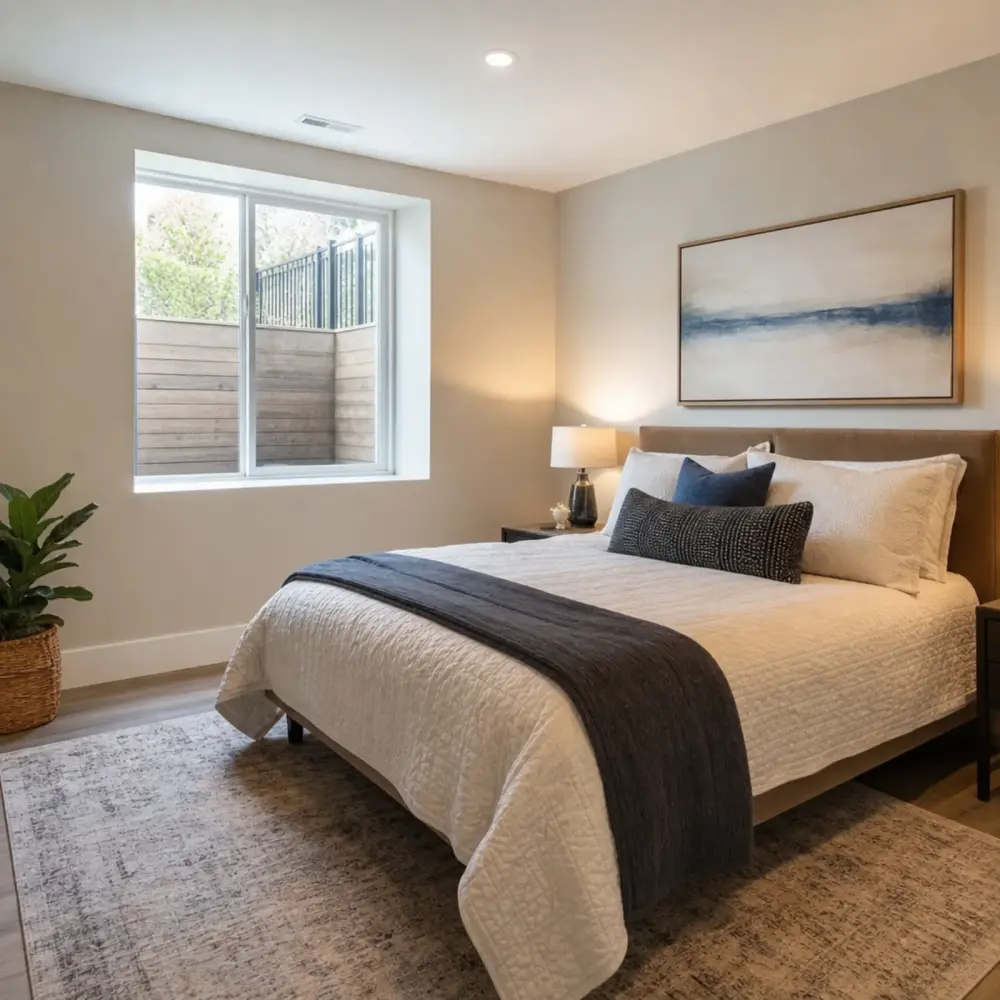
Lincoln Egress Windows replaces failing basement windows across Lincoln - the original single-pane hoppers, rusted steel frames, and glass block that came with the house - with modern, sealed, operable units, installed in the existing opening for $400–$1,100 per window. No concrete cutting, no excavation, and it’s the one service on this site that runs straight through a Nebraska winter.
The distinction that matters up front: a replacement fills the opening you have. If your basement room needs to become a legal bedroom, the opening itself almost certainly has to grow to egress size, and that’s a different job - the full egress installation. We’ll always tell you which one you actually need, because quoting a $700 swap when the code requires a $5,000 cut helps nobody.
What Lincoln’s basements are working with
Walk the basements of Lincoln’s older neighborhoods and you meet the same three windows over and over:
Single-pane steel or wood hoppers - standard in the pre-war and early post-war stock in the Near South, Havelock, University Place, and College View. They hinge inward at the top, seal poorly, and after seventy or more Nebraska winters the frames are rusted or rotted into the wall. In January you can feel the cold fall off them from across the room.
Glass block - the mid-century “upgrade,” common in the 1950s–70s ranch and split-level belt. It stopped the drafts and the break-ins, and it also stopped ventilation, daylight you can open, and any possibility of exit. Many a Lincoln “bedroom” behind glass block is exactly the kind of room an inspector flags in a sale - see code compliance upgrades if that letter has already arrived.
Early builder-grade vinyl or aluminum sliders - in the 1980s–2000s stock, now fogged between panes (a failed seal), tracked with grit, or cracked at the corners. Functional-ish, but done.
Replacing any of these with a modern vinyl unit - double-pane insulated glass, welded frame, real weatherstripping - is the cheapest meaningful comfort upgrade a Lincoln basement can get, and it matters more here than in most rooms: basement openings sit at grade, where snow piles against the glass and meltwater tests every seal.
How the swap works
- Measure. Every opening gets measured individually - original openings in this housing stock are rarely square, and “standard size” is a catalog fiction.
- Remove the old unit. Steel frames set into concrete often need to be cut out; wood bucks come out easier but frequently reveal rot that needs addressing before anything new goes in.
- Prep the opening. A sound, pressure-treated buck frame anchored to the concrete where the old one has failed; clean bearing surfaces; any spalled concrete at the sill patched.
- Set, seal, insulate. The new unit shimmed plumb and square, low-expansion foam in the gaps, exterior sealed against the concrete, interior trimmed clean.
- Verify operation. Opens, closes, locks, drains. Done in an hour or two per window.
Where the window sits inside a well, we check the well while we’re there - anchoring, drainage, cover - because a new window behind a well that holds water is a countdown timer. Well work has its own page, and pairing the two in one visit saves a second mobilization.
Choosing the unit
Sliders are the value pick for wider openings and the easiest to operate with a well outside. Casements crank outward and put the most net clear opening in a tight frame - they’re what we reach for when an opening is close to egress-legal and every square inch counts. Hoppers still make sense for small utility-room openings where code egress isn’t in play. Glass selection matters at grade: insulated double-pane is standard, and where a window sits close to grade or a walkway, tempered glazing is the sensible spec - it’s the same logic building codes apply to glass in hazardous locations, and it’s cheap insurance against a shovel edge or a thrown mower stone.
One honest note on airflow: Lancaster County sits in EPA radon Zone 1, and a basement being upgraded for real occupancy is a basement worth testing. New sealed windows change how a basement breathes; a $15 test kit tells you whether mitigation belongs in the plan.
The bedroom question, answered before you spend
The most expensive mistake on this page is buying a replacement window to solve a code problem. If the room the window serves is a sleeping room - or is about to become one in a finish plan, or is being marketed as one in a sale - the opening is what code measures, not the window in it. Lincoln requires 5.7 square feet of net clear opening for a sleeping room (the city deleted the model code’s smaller grade-floor allowance), with 24 inches of minimum height, 20 of width, and a sill within 44 inches of the floor. The typical original opening in a pre-1980 Lincoln basement is nowhere near that, and no replacement unit can conjure clear opening the concrete doesn’t offer. The honest path in that case is an opening enlargement or new cut - a full egress installation - and we will tell you so at the measure rather than sell you a swap that fails the next inspection. If the room is a laundry, shop, utility, or storage space, none of this applies and the swap is exactly right.
Why people do this now instead of later
Three triggers account for most replacement calls: an energy bill and a cold basement (single-pane openings at grade are the leakiest glass in the house); a failed seal fogging the view from a room someone actually uses; and a sale, where an inspector’s “window inoperable / frame deteriorated” line item reads worse on a report than it costs to fix. Fixing before listing is cheap insurance; fixing under a repair addendum is the same job on someone else’s timeline.
Pricing
| Scope | Typical cost |
|---|---|
| Single window, existing opening, sound buck | $400–$700 |
| Single window, frame rebuild or steel cut-out | $600–$1,100 |
| Three or more windows, one visit | Better per-unit pricing |
| Same-dig well replacement add-on | See well installation |
Full portfolio pricing - including what the number becomes if your project turns out to need a real egress cut - is on the pricing page. Send the form with a photo of the window and rough dimensions, and you’ll get a straight answer on which job you’re actually facing, then a free on-site measure and a flat quote.
Frequently Asked Questions
How much does basement window replacement cost in Lincoln?
Typically $400–$1,100 per window installed, in an existing opening with no concrete cutting. The spread comes from window size and quality, frame condition, and how much prep the old opening needs. Multiple windows in one visit price better per unit.
Can you replace basement windows in winter?
Yes - this is the one service we run year-round. No excavation, no concrete work, and each opening is exposed for an hour or two, not days. Lincoln's 42-inch frost depth shuts down digging from roughly December through March, but it doesn't stop window swaps.
Will a replacement window make my basement room a legal bedroom?
Only if the opening itself is big enough. A sleeping room needs 5.7 square feet of net clear opening - Lincoln deleted the model code's smaller grade-floor allowance - with 24 inches minimum height, 20 inches minimum width, and a sill within 44 inches of the floor. Most original Lincoln basement openings are far too small, and the fix is enlarging the opening, which is an egress installation, not a swap.
What's wrong with my original glass-block or hopper windows?
Nothing, until something. Single-pane hoppers leak heat and rot at the sill; glass block gives no ventilation and no exit; steel frames rust into the concrete. Replacing them with sealed vinyl units cuts drafts, ends the annual re-glazing ritual, and adds windows that actually open.
Do I need a permit to replace a basement window in Lincoln?
A like-for-like swap in an existing opening generally doesn't trigger the structural permit process that cutting an opening does. If the opening changes size, or the room is or becomes a sleeping room, the code scope changes - and we'll tell you which side of that line your project sits on before we quote it.